When I first embarked on my vintage reselling journey, I found myself drawn towards classic porcelain pieces. The thing was, these pieces are incredibly delicate, prone to chipping and crazing no matter the quality.
Glass, at the start of my business endeavor, was completely off my radar. With time, however, and a growing desire to learn more about vintage wares that could reel in more money, I started sifting through the glass collections at my local thrift stores. On the whole, I find good-quality glass to be much less fragile than porcelain, save for the occasional flea bite or scuff.
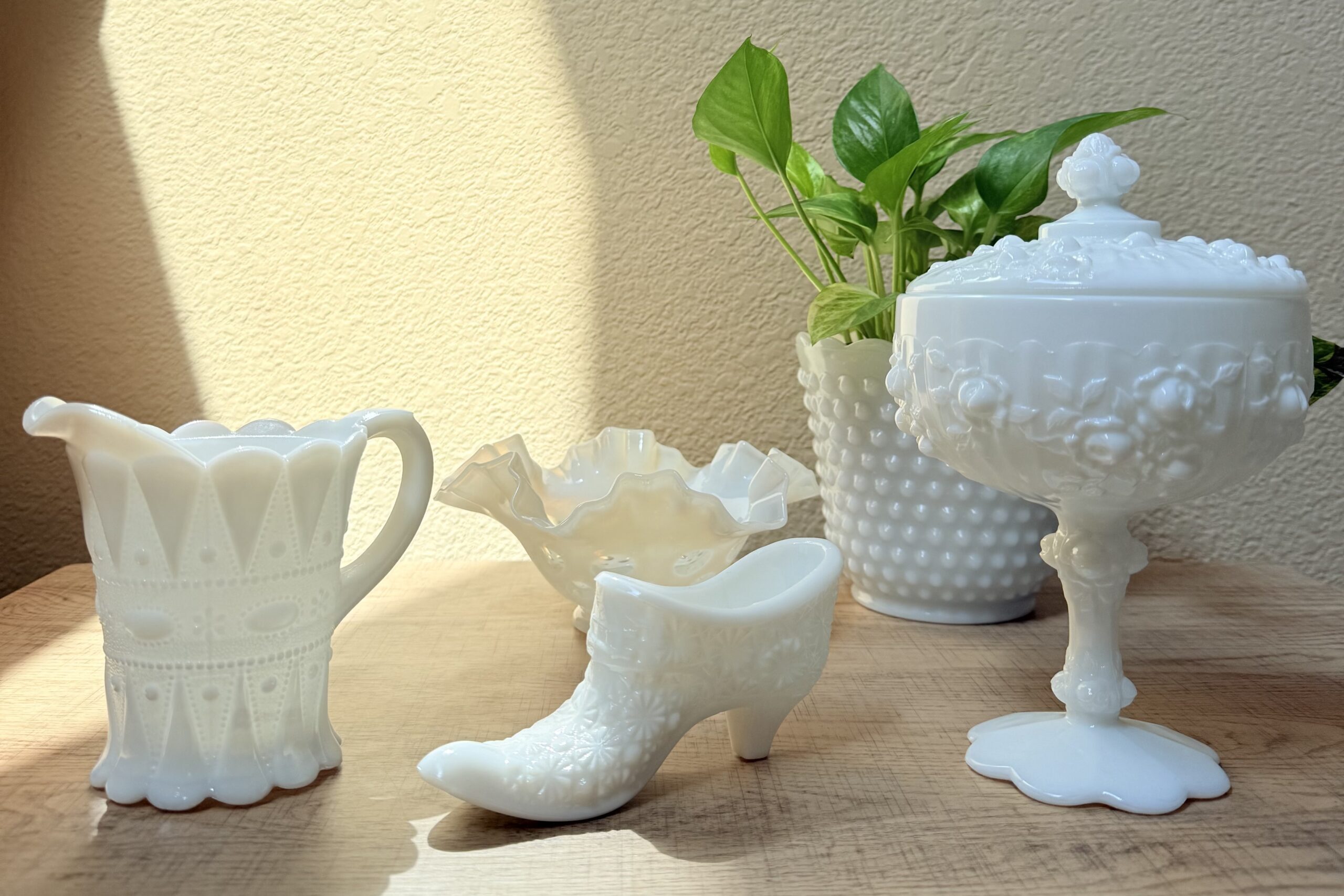
Showy art glass pieces immediately caught my eye, but vintage and antique milk glass grew on me. Milk glass neither looks like glass nor porcelain, so, on a visual level, it exists in this weird-in-a-good-way liminal space. It often features gorgeous, detailed work, which makes it attractive for home decor. Plus, it holds nostalgic value, hearkening back to 1950s Americana. And the cutesy name endears itself to people, kind of in the same vein as “glazed donut skin” or “blueberry milk nails.”
Every day, I find myself learning more and more about the things that I sell, and milk glass is no exception. And so, I’ve created this guide to help novice collectors learn more about what it is and its long history in American glassware.
What does vintage milk glass look like, and how do you identify milk glass?
As its name implies, milk glass is glass that resembles milk with its opaque, white finish. While most milk glass pieces are opaque, some milk glass can also be translucent, like a thin layer of milk against a clear glass cup. Some people actually distinguish between opaque white glass and this more see-through glass—to them, the latter would actually be the true milk glass, as it tends to have more of an attractive glossy, iridescent finish.
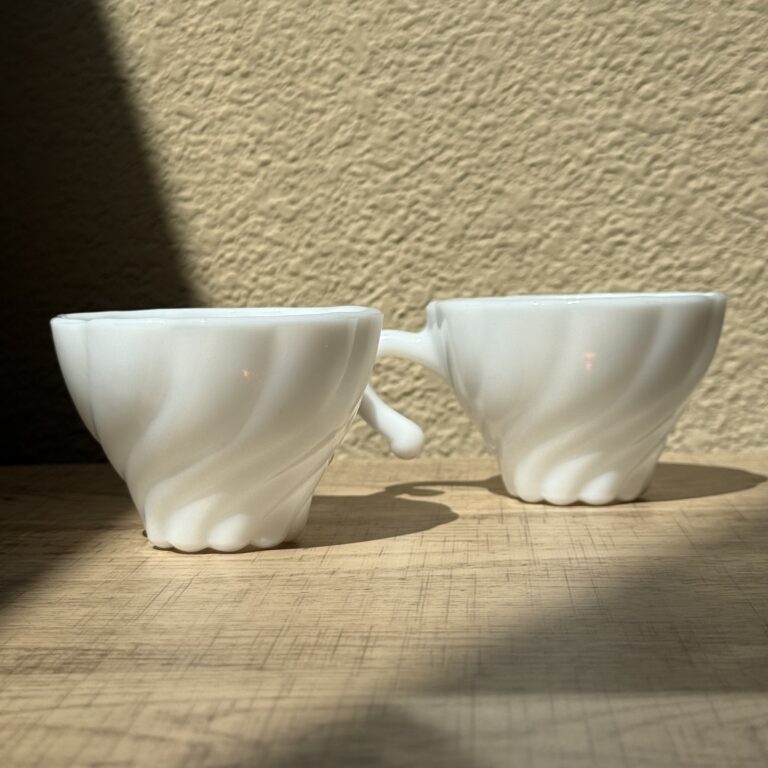
Around the ‘40s to ‘60s, many glass manufacturers created kitchenware and dinnerware pieces with a milky, opaque look. While I personally consider these pieces “milk glass,” not all collectors will agree. These pieces, which come from brands like Macbeth Evans, Pyrex, Federal Glass, and Hazel Atlas, are sometimes considered opal glass or white glass. Technically, they’re designed to be much stronger than traditional milk glass so that you can eat from them and heat them up without issue.
Old milk glass predating the ‘60s tends to have a “ring of fire”. In other words, if you put the piece up to the sun, you can see an orange circle. (The reliability of this method, however, is up for debate.) Older pieces also usually feature seam lines along the edges, indicating, potentially, that they were created in the late 19th to early 20th century.
While milk glass is typically white, you can also find it in other hues, such as blue, pink, green, and black.
What are the different styles of milk glass?
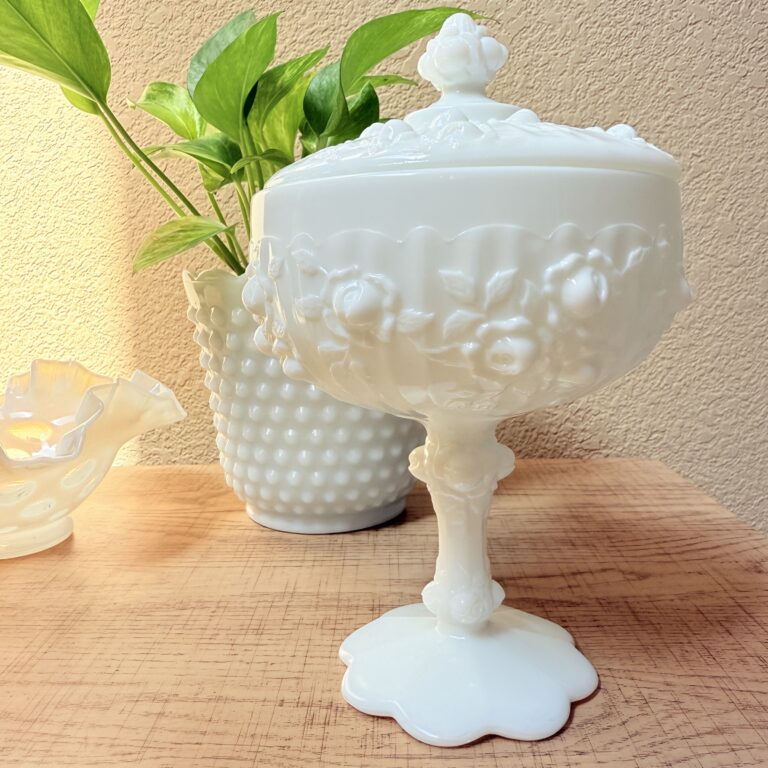
What exactly can you find made out of milk glass? A little bit of everything! If you hit up an estate sale with a really good milk glass collection, you might find many different retro tableware pieces made out of milk glass. Think plates, bowls, cups, creamers, goblets, and covered dishes.
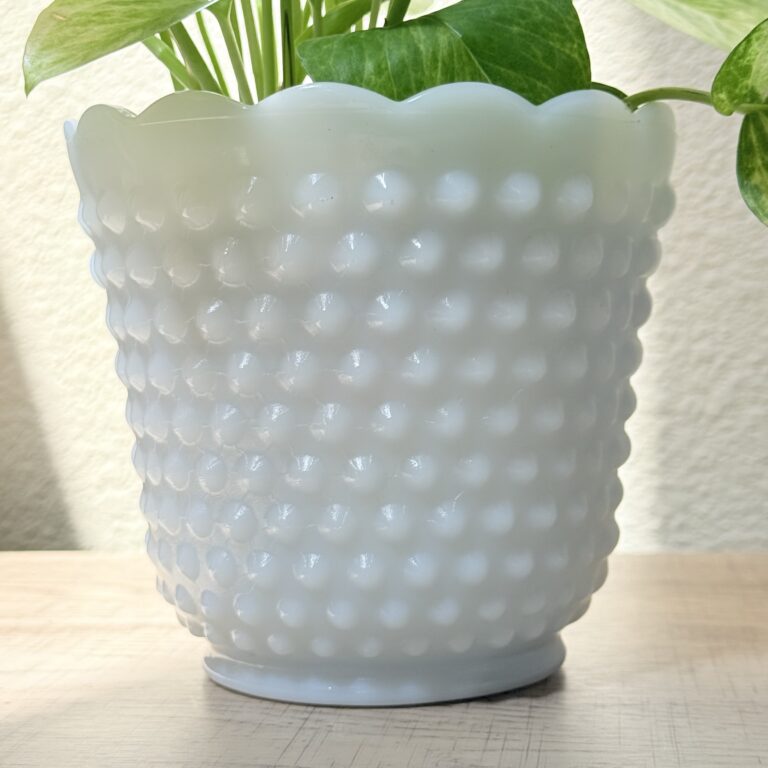
Milk glass can also come in the form of planters and vases. In fact, many florists displayed arrangements in milk glass vases (including small milk glass bud vases and showstopper Fenton ones) throughout the ‘50s and ‘60s.

As milk glass can be blown or pressed into its final form, its texture can vary widely. Smooth milk glass is common, but so are pieces with hobnail bumps and ruffled edges. Also widely available are milk glass designs of animals, flowers, basket weaves, lace, leaves, scalloped edges, and grapes.
Hobnails and ruffles are commonly associated with the Fenton Art Glass Company, whereas grape designs tend to have ties to the Westmoreland Glass Company. In general, ornate, dense milk glass is usually more desirable than smooth, delicate pieces.
When was milk glass first produced?
Today, milk glass can actually fetch vintage and antique dealers a pretty penny, but it was actually originally created as an affordable dupe material. It emerged in the 16th century, when Venetian glassmakers wanted to create a cheaper alternative to Chinese porcelain. While the low- and middle-income populace couldn’t afford porcelain, they could indulge in its opulent look with dense milk glass pieces.
Flash forward to the early days of America. George and Martha Washington touted a collection of fine Chinese porcelain, and the rest of America wanted the dupes. Milk glass became an inexpensive way for common Americans to emulate the President and First Lady. It gained momentum in the United States throughout the mid-to-late 19th century. It was during this period, the Victorian era, that the white color we associate with milk glass today became a mainstay.
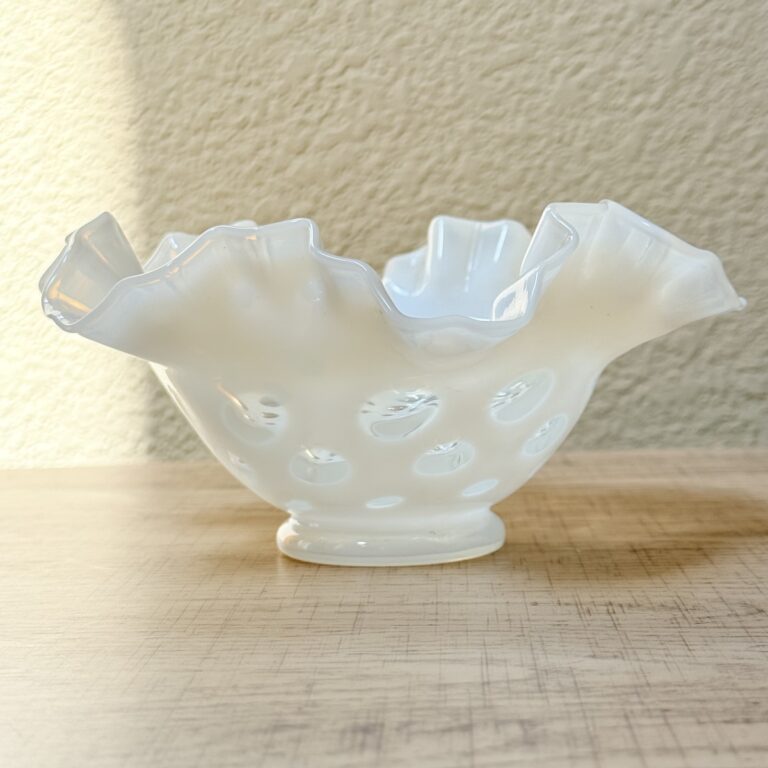
After World War II, America saw a boom in mass production, and companies like Fenton and Westmoreland created some of the most beloved and collectible milk glass pieces that we find in antique stores today.
What is milk glass made of?
Early milk glass included arsenic, which gave it a grayish, pearlescent look. More modern milk glass pieces tend to have feldspar or tin oxide for a white, creamy finish. Glass workers would create milk glass by pouring molten glass into iron molds, then using a plunger to force the molten glass into every nook and cranny of the molds. During the Industrial Revolution, machines were eventually created to press the glass into molds.
So there you have it, a deep dive into all things milk glass. Hopefully, this little post has helped you know what to look for the next time you search for milk glass at estate sales and antique shops. I hope the thrift gods are in your favor—if not, I’ve got some handpicked vintage milk and white glass up on my Etsy shop!