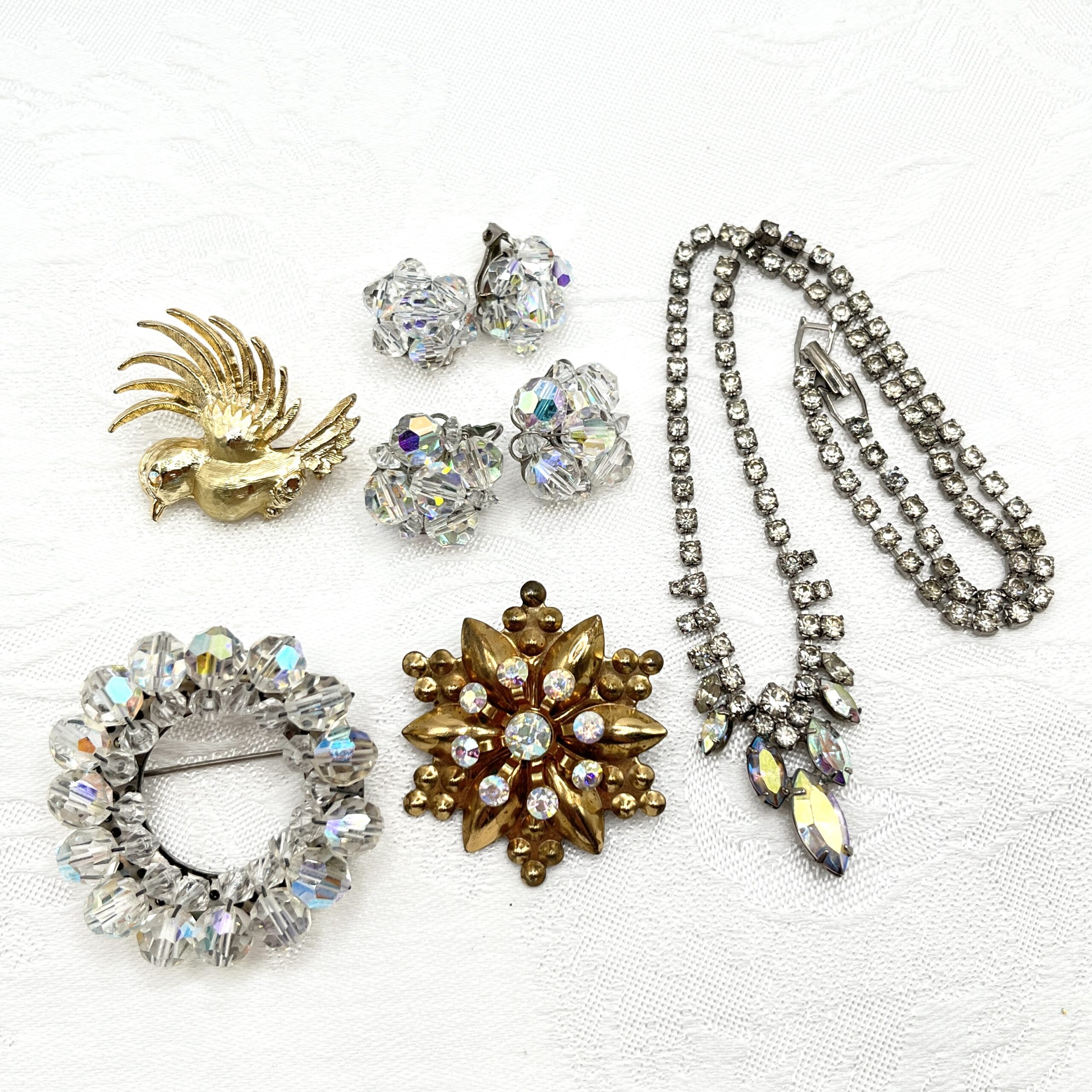
I must admit that prior to last year, I was a complete jewelry novice, only occasionally picking up cheap modern costume earrings at craft fairs and department stores. Now, I find myself lost in the weeds over what most people might consider minutia, obsessing over seemingly trivial details like rhinestone composition.
When you’re looking at sparkly vintage jewelry pieces such as brooches and bracelets, you’ll quickly find out that not all rhinestones are the same. One of the rhinestone types that really stood out to me when I made my foray into vintage jewelry was the AB or aurora borealis rhinestone. It’s not just a regular rhinestone—it’s a cool rhinestone, pulling in your attention with its gorgeous iridescence.
What is an AB or aurora borealis rhinestone?
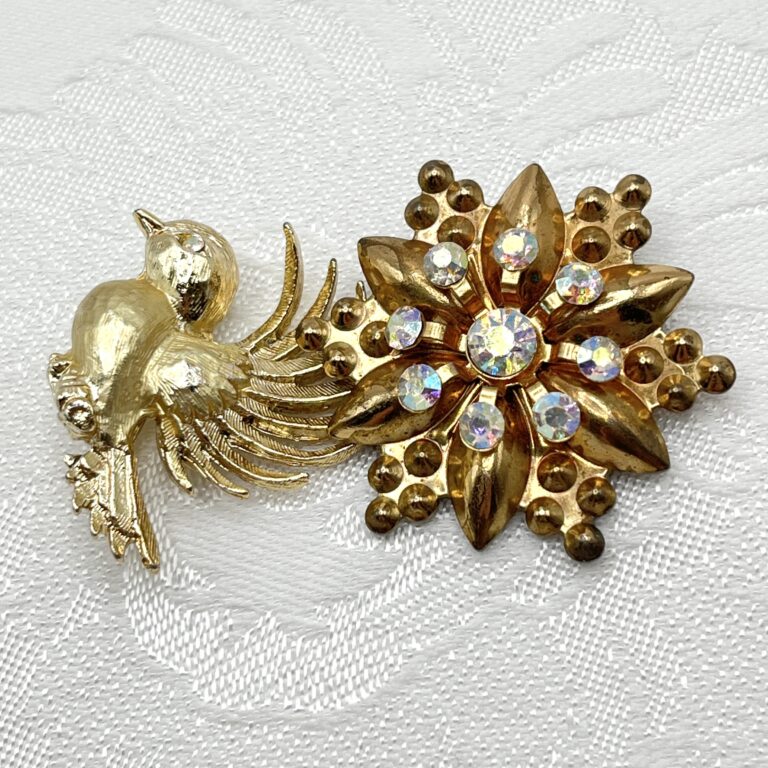
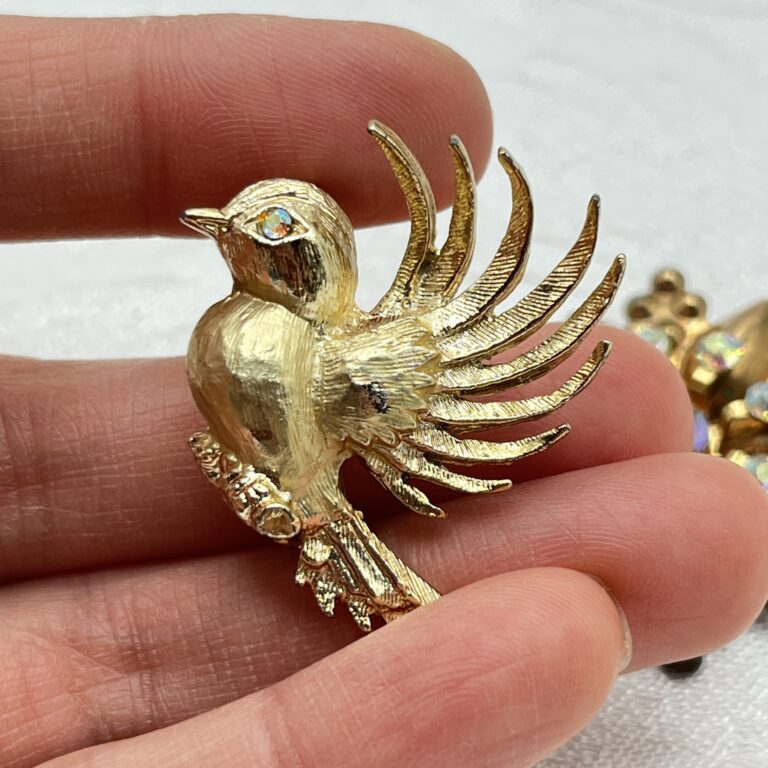
Essentially, the AB rhinestone is a crystal rhinestone with a polychrome coating, which gives it a prismatic or kaleidoscopic—think rainbow—finish for extra shine. As you may have surmised, the descriptor “aurora borealis” pays homage to the northern lights phenomenon, a mesmerizing glow that occurs when charged particles from the sun collide with Earth’s upper atmosphere.
Most AB stones are clear with that signature rainbow coating, but you can find them in other colors, such as red, blue, green, and more. The possibilities are abundant.
What is the history of the AB rhinestone?
The concept of a metal-backed rhinestone has been around for a minute. Although rhinestones are relatively inexpensive these days, they were considered a luxury item in the late 18th century when they debuted. The pioneering of the rhinestone is typically attributed to Viennese jeweller Joseph Strasser or Georg Friedrich Strass of Alsace, France.
While AB rhinestones are ubiquitous today, they do hail from luxurious roots. In 1955, Manfred Swarovski and Christian Dior collaborated to create the AB rhinestone. Swarovski had been known for developing an electric glass-cutting machine that produced crystal rhinestones that sparkled like diamonds. Crystal AB Swarovski rhinestones were even more eye-catching, and they became beloved components of costume jewelry designs by brands such as Weiss and Lisner.
Where can you find AB rhinestones?
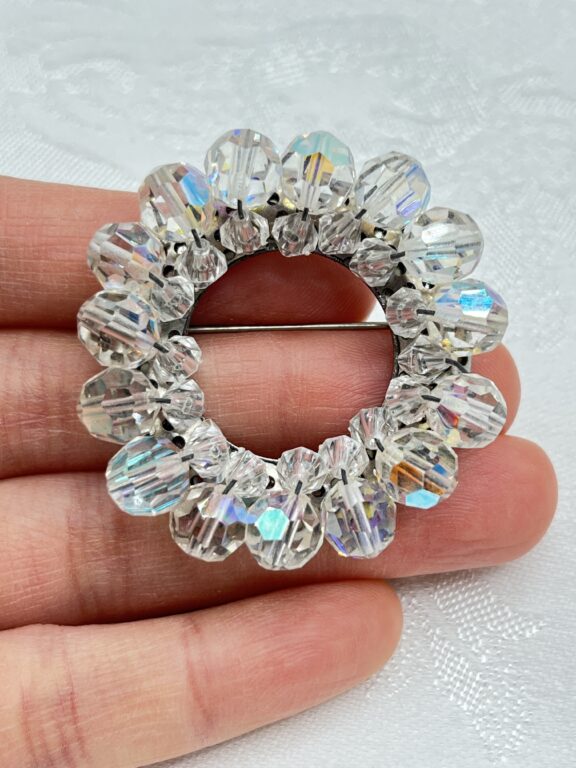
As I’ve mentioned above, AB rhinestones are everywhere, and you can find them on all types of jewelry. For the most part, I spot them on earrings, necklace pendants, and brooches. I should note that the AB coating isn’t exclusively on rhinestones–you’ll also find it on chunky beads worked into necklaces, bracelets, and earrings. The only differences are that they’re strung or woven together by beading wire or thread and that they don’t have a metal foil backing.
How do you care for AB rhinestones?
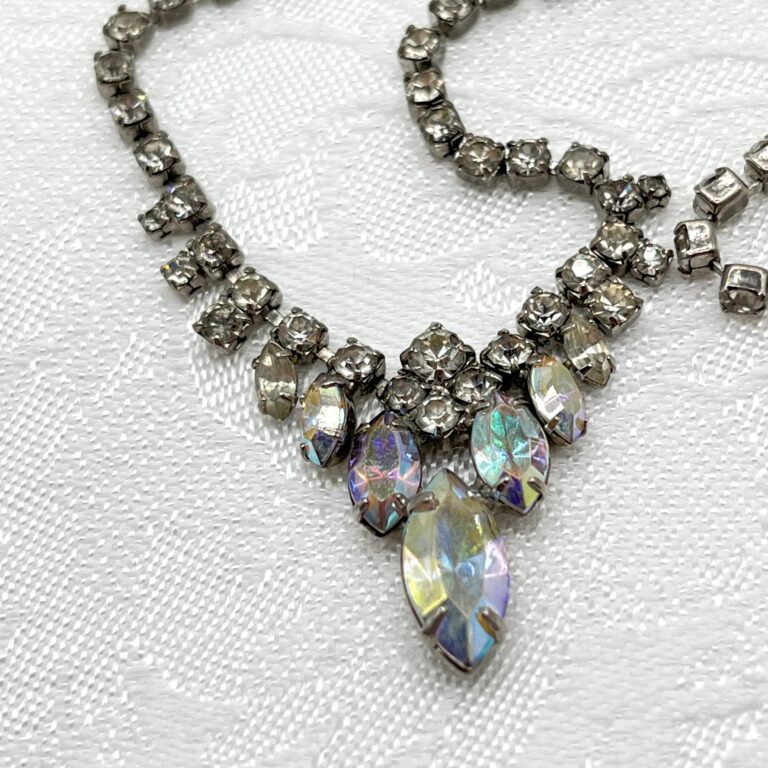
The unfortunate reality with AB rhinestones is that their coating does come off with wear and tear, so you want to avoid scratching them or rigorously cleaning them. Over time, though, you might find gunk or dust on your AB rhinestones.
It’s imperative that you avoid using harsh chemicals that could damage their coating or dislodge them from their setting. It’s safest to use a dry cleaning cloth (like a glasses or jewelry cleaning cloth) or cotton swab to gently clean the stones, as you don’t want to dunk any kind of rhinestone in water. While some cleaning guides suggest using soft toothbrushes, I find that the bristles can leave scratches on the coating.
You can dip your cloth or swab in a tiny bit of water (maybe, if you’re feeling kind of risqué, mild soap and water), but you want to make sure that you dry your stones well before storing them since moisture can deteriorate the coating and back foil.
So there you have it—a sweet and simple guide to AB rhinestones. Now that the culture is finally shifting away from the pared-down preppy and clean girl aesthetics, I’m anticipating a good deal of AB bling in the near future. I’ll continue to search for AB pieces to put on my shop, so be sure to check it out!