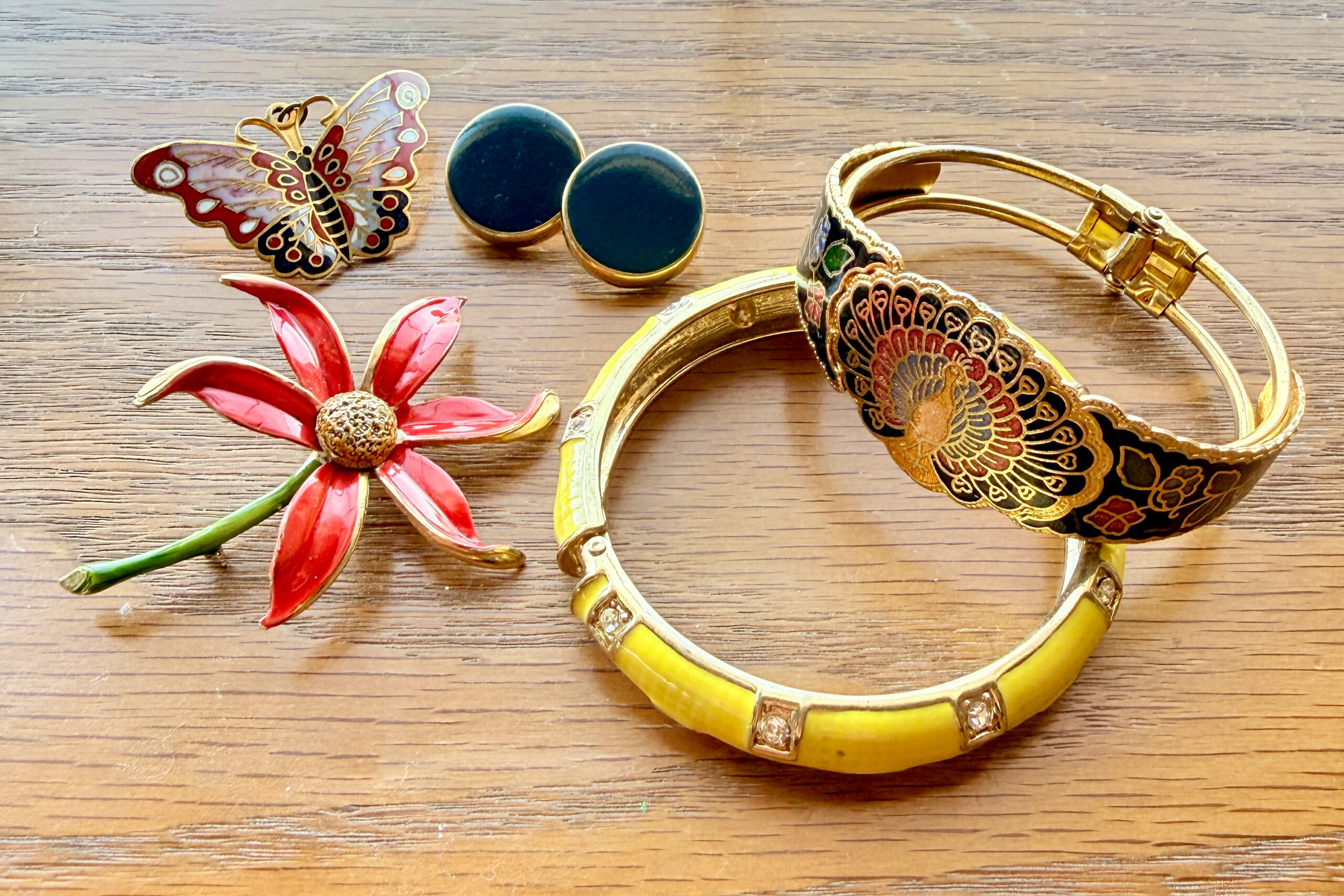
When I launched my vintage jewelry shop last year, I desperately sought out pieces with glimmery gems and sparkling rhinestones. Reality diverged from my hopes and expectations, of course. While treasure hunting at thrift stores, estate sales, and flea markets, I actually found myself picking up a great deal of enamel jewelry, hoarding everything from enamel bangles to gold tone cloisonné clip-on earrings.
At first glance, enamel jewelry isn’t super exciting. After all, enamel scatter pins are essentially the bread and butter of Hot Topic bins and comic book conventions. That said, enamel can be an extremely versatile material in jewelry making, allowing jewelers to add color, texture, and durability to pieces without the cost and flashiness of gemstones.
So, what is enameling in jewelry, and what is its history in jewelry making? I found myself curious to get to the bottom of these questions after listing many, many enamel brooches, so I did my due research and have come here to relay the answers to you.
What is enameling on jewelry, and how is enamel jewelry made?
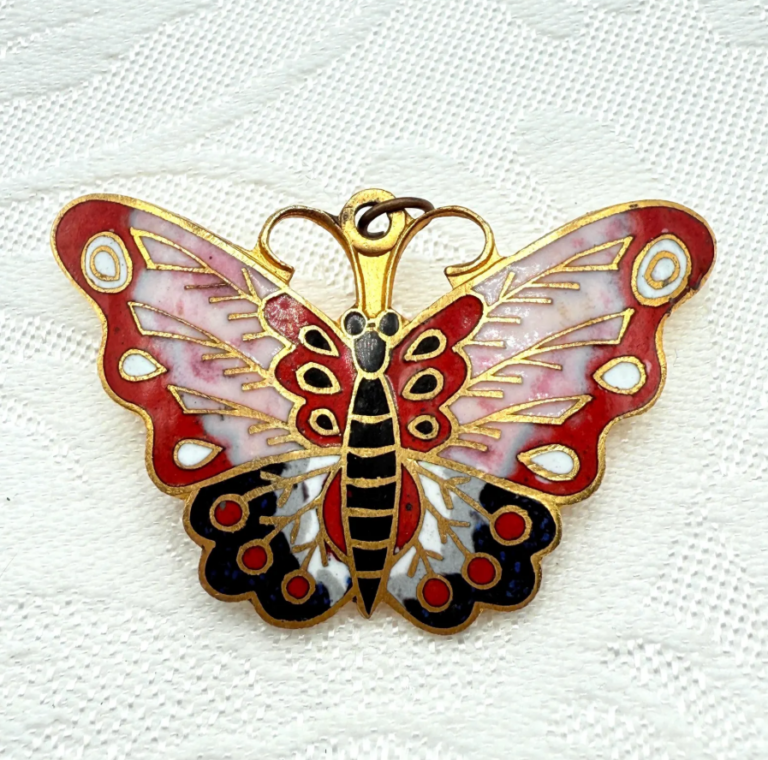
Enameling on jewelry is essentially powdered glass fused onto a metal surface for decorative purposes. Traditionally, enamel artists start their process with powdered glass and a coloring agent, which they blend into a fondant and apply to a metal surface. They then fuse the fondant to the metal by heating the piece up in a kiln at high temperatures—think up to 1450 degrees Fahrenheit. In the kiln, the enamel softens and develops a smooth and glossy finish before it is allowed to cool down and harden.
That’s hot enameling. The alternative to the method above is cold enameling. Cold enameling works the same way a two-part epoxy glue resin does. You have a base and a hardener that are mixed together and allowed to set and cure without heat. Cold enameling isn’t really technically enameling—but it allows the average home jewelry designer to create, more or less, the same results sans kiln.
When was enamel jewelry popular?
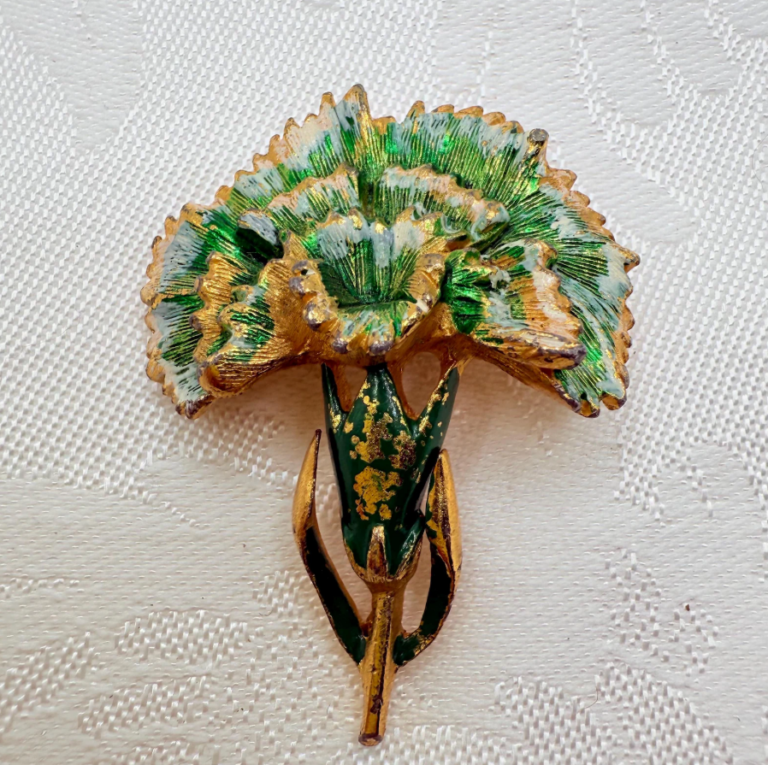
Enameling allows for artistic detailing on jewelry without requiring the use of expensive gemstones, so it’s been a common jewelry-decorating technique for literally centuries. The history of enamel jewelry dates all the way back to the 13th century BCE–excavations in Cyprus revealed that enameling was a technique used on rings in the Mediterranean between the 13th and 11th centuries BCE.
Within the context of the last century, enameling was popularized around the Art Nouveau era, during which we saw enamel work on less precious metals such as pewter. As artists pushed back against industrialization, they gravitated towards natural motifs such as flowers, plants, animals, and mythical creatures. Enameling, especially the plique-à-jour technique, allowed jewelers to create a pretty stained glass effect on pendants and brooches of things like dragonflies, butterflies, and flowers.
Enameling was also then utilized around the ‘70s, and it was during this Flower Power decade when we saw vibrant enamel flowers and enamel mod earrings.
What are some different types of jewelry enamelling?
- Cloisonné enamelling: Cloisonné is a specific type of enameling in which the different sections of enamel fondant are partitioned by wires on a flat metal surface.
- Plique-à-jour: This type of enameling is very similar to cloisonné, but there’s no metal backing, which allows light to pass through the enamel for a stained glass effect.
- Champlevé enameling: The metal surface is etched and then filled with enamel, which is then polished until it is smooth. You might commonly see this technique on etched brass vases.
- Basse-taille enameling: Basse-taille enameling features a Transluscent enamel poured over engraved metal, with the engraved sides high enough to keep the different colors of enameling separate.
How do you take care of enamel jewelry?
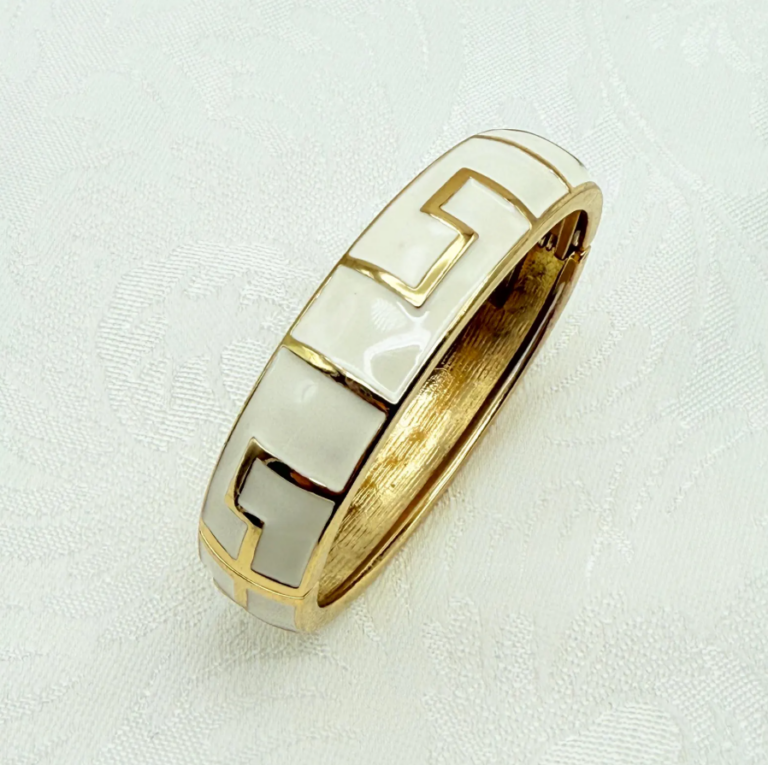
Enamel jewelry can be prone to chipping and fading, so it’s best to treat it with the utmost care. You really only want to clean it with a dry cloth, if possible—or lukewarm water with a mild dish soap if you need extra reinforcements. Heat, light, prolonged exposure to moisture, and tough chemicals—even simple rubbing alcohol or a Clorox wipe—can damage enamel jewelry.
While ubiquitous, enamel jewelry is certainly nothing to sneeze at. Enameled details can add character to a piece and elevate what would otherwise be a basic hunk of metal. There’s a lot to appreciate about the craftsmanship of enameling, and how the details are not only decorative but also protective. And as a relatively novice vintage jewelry collector, I’ve merely just begun to respect the artistry that goes into enameling.