On my vintage Etsy shop, I divide my brooch offerings into four main categories: flowers, animals, Christmas, and the obligatory and oh-so-broad miscellaneous. Of course, these sections don’t even begin to scratch the surface when it comes to different brooch styles.
Many vintage brooches feature some sort of flower or animal design on the front and a clasped pin on the back. But that’s not the only type of brooch construction out there—there are plenty of other styles for various sartorial purposes, whether you’re jazzing up a dress, suit, bag, or scarf.
As much as I love a simple flower or animal design, I can appreciate the wide-ranging scope of brooches out there. After a few months of vintage jewelry hunting, here are the seven different brooch styles that I’ve come across most frequently.
Safety pin brooch

The idea of a safety pin brooch strikes me as odd, but it is most definitely a Thing. A safety pin brooch is exactly what it sounds like: It’s the utilitarian metal fastener you’d use to hold fabric together in a pinch, except decked out when used for decorative purposes. You might have rhinestones encrusted on the clasp or cutesy charms dangling from the bottom needle.
So, what about placement? You can wear a safety pin brooch on the lapel of your blazer or on a chest pocket. Some people even use these pins to bridge the two sides of a V-neck sweater or blouse.
Circle pin brooches
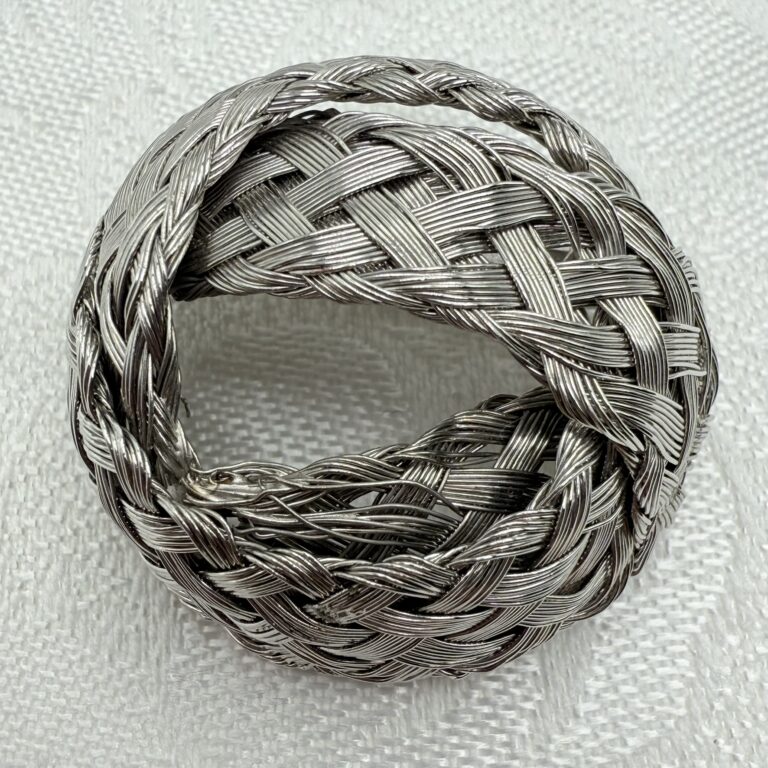
I literally ALWAYS find circle brooches when I buy vintage jewelry in bulk. At a cursory glance, they’re not the most exciting pins out there, which is probably why they end up in bulk lots. But I do find that circle pins sell for me, especially when I price them low.
I think it’s because people can use them for many different purposes. Open circle pins are versatile—you can use them to cinch shirt waists, knot scarves, fix ribbons onto hats, or tie back oversized dresses. Some people even place them on their lapels for a subtle pop. While silver and gold tone scarf pins are common, you can find this silhouette in blingy rhinestone iterations, too.
Cameo brooches

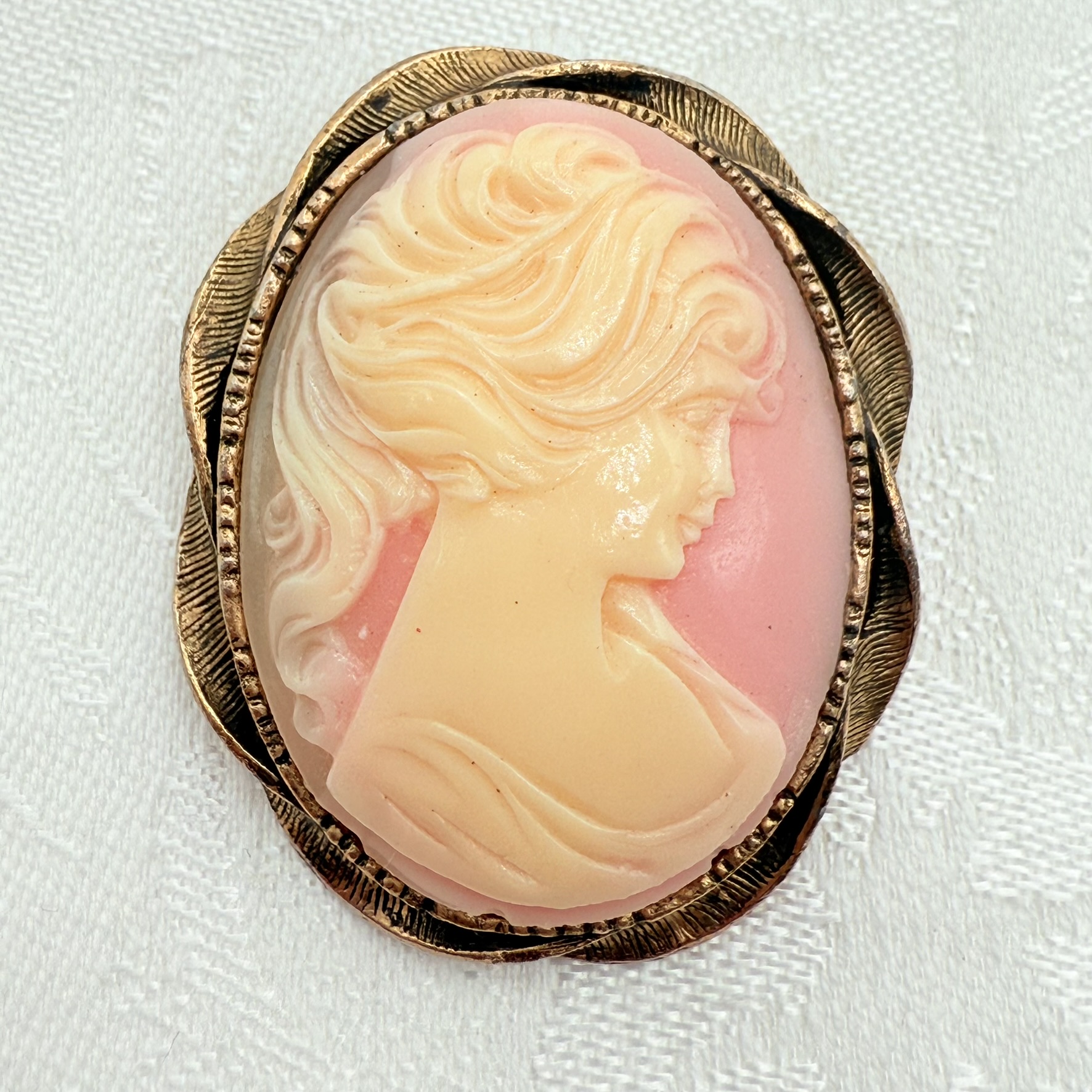
Cameo brooches typically feature an off-white silhouette of a person (usually a woman) against a brown, pink, or blue backdrop. During the Renaissance, cameos signified wealth and status. Today, they evoke a more sentimental vibe, sometimes even featuring lockets for placing in small photographs or mementos of loved ones.
Cameo brooches exude a hoity-toity Victorian elegance, but they’ve been around for a long time—that is, long before the Victorian era. Some cameo jewelry, in fact, even dates back to the days of Ancient Greece and Egypt. This style has had many revivals throughout the millennium, including during the Renaissance, Neoclassical, and Victorian eras.
I don’t often find cameos out in the wild since people LOVE cameos and snatch them up quickly. If I do find them, I tend to spot them at places like antique fairs, where they’re often in curated collections that go for more than your regular thrift store prices. If you do want a cameo on a budget, I definitely recommend poking around eBay and Whatnot auctions to hunt down a good deal.
Traditionally, cameo brooches have been made out of carved shell, hard stone, or Jasperware—that said, modern pieces may feature resin or plastic materials. They’re almost too pretty to wear, but you 100% can work them into modern outfits. I think they look fabulous on collars, especially standing collars. That said, I’ve also seen them tacked onto lapels, breast pockets, and scarves.
Starburst/sunburst/atomic brooches

Starburst and sunburst style brooches hail from the Atomic Age. After the horrific bombings of Hiroshima and Nagasaki, American designers leaned into the public’s anxiety and intrigue around the rise of nuclear energy during the Cold War. They took inspiration from the image of electrons swirling around an atom’s nucleus as well as that of an atomic blast.
Historian Donna Alexandra Bilak posits a really interesting theory about Atomic Age jewelry. “Atomic Age jewelry presents a material example of how the American fashion industry cashed in on the atom and promoted a feminine ideal that bolstered the country’s postwar conservative values,” she writes in an article for the Science History Institute.
These starbursts and sunbursts were used to complete looks that the patriarchal society of the ’50s deemed peak femininity. “Depending on its placement a brooch might draw attention to a soft, rounded shoulder or the delicate collarbone area, thus showing off the curve of a neckline or accentuating the ruffle of a scarf,” Bilak explains.
These days, of course, you don’t have to subscribe to traditional gender roles—tradwifery, if you will—to enjoy a starburst brooch. It’s certainly possible to appreciate the elegance of a piece and be cognizant of its thorny history at the same time. I highly encourage my fellow feminists to adorn themselves with these gorgeous pins!
Enamel floral brooches

I’ve found enamel floral brooches to be pretty consistent sellers on my Etsy shop. They’re simply painted metal pins with vibrant, punchy colors. Think groovy Scooby Doo mystery van colors—groovy is an apt adjective here since this style hails from the ‘60s and ‘70s. These vintage metal flower pins add a pretty pop to dresses and blouses, and I’ve also seen customers place them on purses!
Scatter pins

When I think of scatter pins, I think of hardcore fans at comic book conventions with impressively decorated canvas messenger bags. A scatter pin is really any type of pin that’s small and worn with other small pins to create a set or image. Scatter pins don’t have to be teeny tiny, but I don’t consider showy large Betsey Johnson and Joan Rivers brooches scatter pins.
Back in the ‘50s, a scatter pin cluster usually looked like birds and flower brooches thoughtfully arranged on a dress. But, of course, you can go for any theme you’d like these days.
Stick pins

Like safety pins, stick pins are somewhat otherworldly to me just because they break the mold of a traditional brooch silhouette. Rather than being stuck on the back of a design, the pin is really the whole piece, featuring both a decorative and cap end.
People thread stick pins through the lapel of a suit jacket or blazer. That said, you can also wear a stick pin on a hat or scarf without a problem. The key thing here is that the capped end keeps the brooch from getting loose.
So, there you have it—the seven most common types of vintage brooches. Whether you’re a novice collector getting into brooches or a vintage jewelry lover looking to expand your knowledge on pins, I hope this helped!